The Thesis
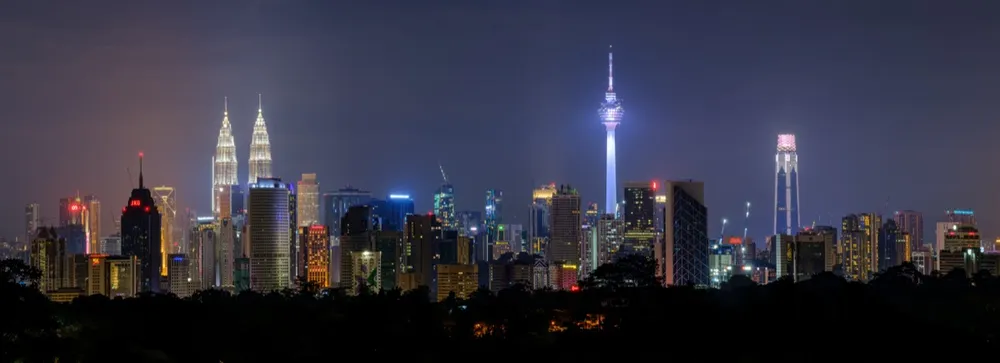
The conventional bond market narrative says the Middle East is the center of gravity for Islamic finance. H1 2026 is telling a different story — and the punchline is that Malaysia quietly outran the Gulf while nobody was paying attention.
Global sukuk issuance reached $129 billion in the first half of 2026, up from $112.3 billion over the same period last year. That is a 15% jump in six months. The number that matters more: GCC issuance declined 9% over the same stretch. Malaysia absorbed the gap and then some, through a local-currency domestic market that has now become the structural backbone of global Islamic capital markets.
What the Numbers Actually Say
Breaking this down matters. Of that $129 billion, local-currency sukuk accounted for $87.6 billion — up $18.6 billion year-on-year. Foreign-currency sukuk fell $1.9 billion to $41.4 billion. Those two lines together tell you the story: the growth is coming from domestic markets, not international issuance. And the dominant domestic market is Malaysia’s.
This is not a fluke. Malaysia has spent two decades building the institutional infrastructure for a deep sukuk market — the Securities Commission, the regulatory framework, the liquidity management infrastructure through IILM, the investor base. The H1 2026 numbers are that infrastructure paying off.
S&P Global, the source of these figures, maintained its full-year 2026 forecast at $270 billion to $280 billion — up from $264.8 billion in 2025. The trajectory is intact, but it is more Malaysian than GCC this year.
Why the GCC Slowed
The 9% GCC decline is not hard to explain: the Middle East conflict has weighed on sovereign borrowing appetite, reduced hydrocarbon output has narrowed fiscal room, and non-oil economic activity softened in H1. Sovereigns that were aggressive issuers in 2024 and early 2025 have pulled back.
That matters because GCC sovereigns have historically been the anchor for foreign-currency sukuk — the issuances that attract international institutional investors. When they step back, the international profile of the market shrinks even if the headline number holds. What Malaysia offers is domestic depth, not necessarily the cross-border capital allocation that the GCC historically drove.
The Limit Worth Naming
Local-currency dominance has a ceiling. Malaysia’s sukuk market is large and liquid by Islamic finance standards, but it operates primarily in ringgit. For an international investor building a diversified fixed-income portfolio, ringgit-denominated sukuk carries currency risk. The global sukuk market does not fully substitute for the GCC’s dollar-denominated paper when it comes to institutional portfolio construction.
So the $129 billion headline is real, but the composition shift deserves honesty: this is a market that has become more domestically resilient and more geographically concentrated at the same time. That is good news for Malaysia’s financial sector. Whether it is good news for the global Islamic finance agenda depends on whether GCC sovereigns return to the market in H2.
What to Watch
S&P’s $270–$280 billion full-year forecast is achievable, but it requires the GCC to accelerate in H2 — there is no other issuer pool large enough to close the gap if the Gulf stays quiet. Watch Saudi Arabia specifically: when Vision 2030 infrastructure spending picks back up, sovereign sukuk issuance tends to follow. If that resumes by Q3, the full-year number lands. If geopolitical friction persists into H2, the market closes the year at the lower end of the range — or below it.
The more interesting question for 2027 is whether a third market emerges. Turkey and Indonesia are both developing their sukuk infrastructure. Neither is at Malaysia’s scale yet, but both have the sovereign borrowing appetite and the Muslim-majority investor base to close the gap. The global sukuk market is more concentrated than it looks from the topline number — and that concentration is itself a risk worth watching.